
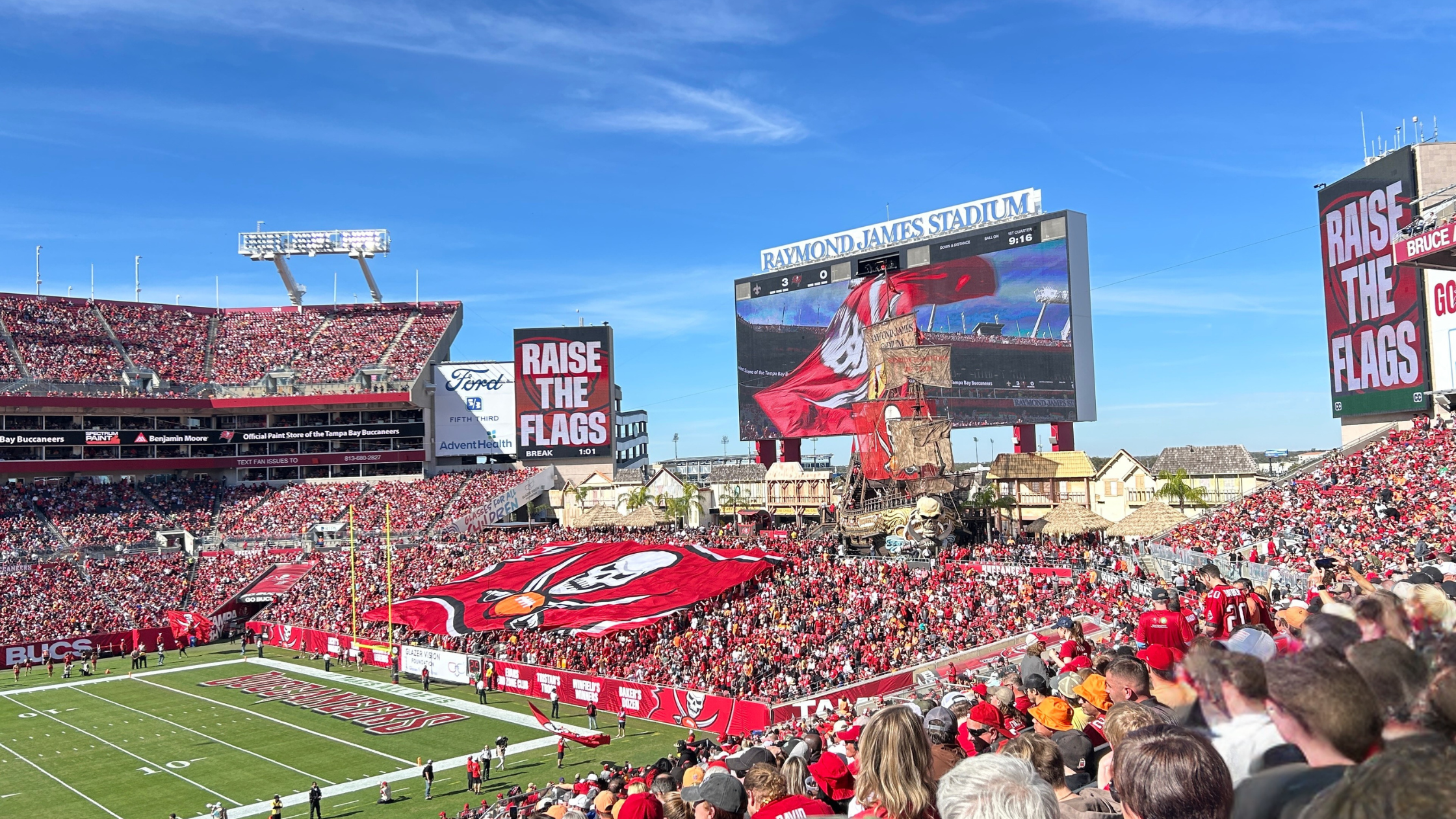
I’ve always been fascinated by operations.
Honestly, I notice systems everywhere. Even when I’m visiting an NFL stadium, I find myself thinking about everything happening behind the scenes to make the experience feel seamless from the moment people arrive. I’m always curious about what had to be built, tested, communicated, and repeated to make showtime feel effortless.
I think that perspective comes from the range of environments I’ve learned from over the years.
I was mentored young by small business owners, and one of the earliest places that shaped me was Off the Wall Adventures, a scuba, paintball, and outdoor adventure business with events, inventory, constant moving parts, and a big focus on customer experience. Later, I saw a completely different side of operations at the Mary Brogan Museum of Art and Science, where programming and presentation had to come together in a polished and intentional way. At Jackson Properties, I got my first real exposure to real estate and saw how one investor could build a diversified business over time. Then there was running my own business as a real estate agent, and even earlier, learning consistency and customer service through Sally Beauty.
On paper, those experiences may not seem connected, but to me, they absolutely are. They all taught me that strong systems are what make growth sustainable.
Operations is where growth goals either become reality or become noise.
Aggressive growth goals are exciting. But in many organizations, the conversation quickly turns to adding more headcount, layering on more systems, and expanding the tech stack.
My take? Before doing any of that, leadership should pause and ask a few harder questions.
First: is the team fully trained on the tools already in place?
Technology changes constantly. A training from onboarding a few years ago is not enough. Systems evolve, features improve, and workflows shift. Ongoing training is one of the simplest ways to unlock efficiency, reduce redundancy, and help teams work smarter with what they already have.
Second: do the current workflows actually make sense at scale?
A process that works when volume is manageable may break down quickly during periods of aggressive growth. It is worth asking whether the sequencing still makes sense, whether bottlenecks have truly been addressed, and whether friction points have been solved or simply tolerated. What feels like a small speed bump today can become a major operational blocker tomorrow.
Third: does the team realistically have the bandwidth?
Just because a team can carry more does not always mean they should. Growth requires capacity, but it also requires sustainability. If companies want strong performance, they have to create environments where people feel supported, heard, and equipped to do their best work. Sometimes that means more headcount. Sometimes it means better systems. Usually, it starts with asking the people doing the work what they actually need.
Growth is not just about adding more. It is about building better.
My honest opinion: the strongest organizations are the ones that evaluate training, workflows, and team capacity just as seriously as they evaluate revenue targets.